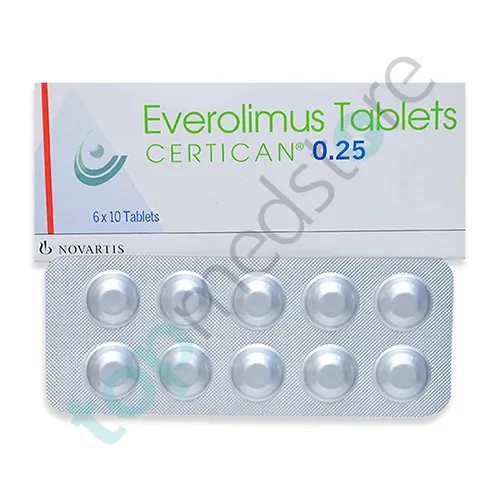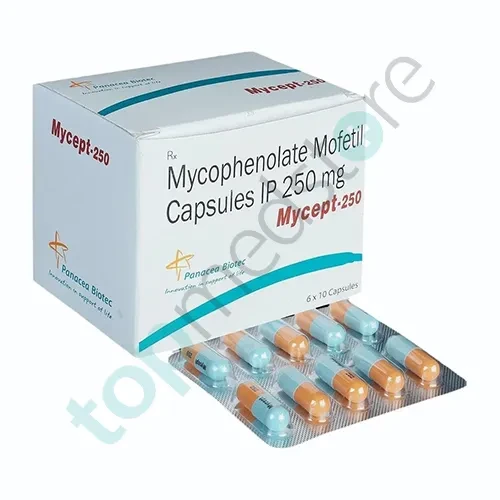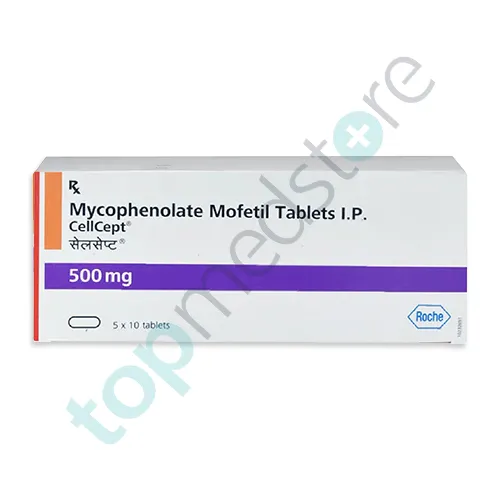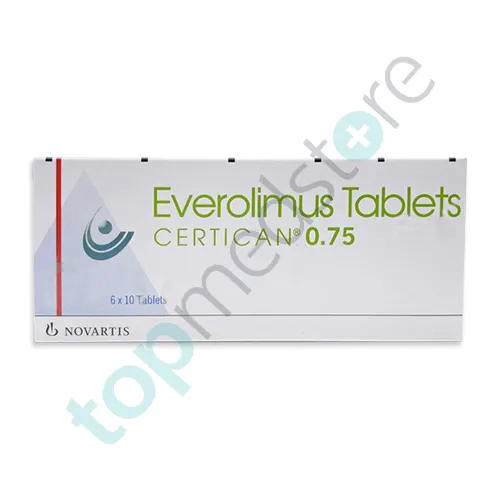
Everolimus 0.75mg
$304.40 – $996.40
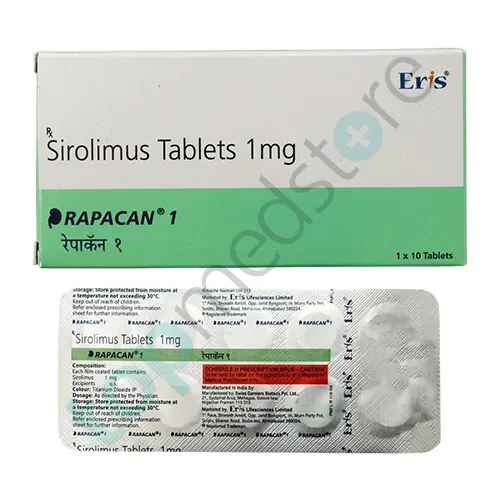
| Product name | Sirolimus 1mg |
|---|---|
| Active Ingredient | Sirolimus |
| Dosage | 1mg |
| Drug Type | Tablets |
| Indication | Organ Transplant Rejection Prevention |
| Manufacturer | Eris Lifesciences Ltd |
Total $334.60
Sirolimus 1mg is an immunosuppressant medicine used to control the body’s immune response. It belongs to the mTOR inhibitor class, which means it slows down immune cell activity and cell growth. A transplant specialist or nephrologist usually prescribes this medicine after organ transplantation or in specific immune-related conditions.
The immune system protects the body from infections. However, after an organ transplant, the immune system may recognize the new organ as “foreign” and try to attack it. This can lead to organ rejection, which means the body starts damaging the transplanted organ.
Sirolimus is also used in some non-cancer growth-related conditions, where cells grow abnormally and need to be controlled.
Sirolimus 1mg tablet helps maintain balance in the immune system and protects the transplanted organ from rejection.
Doctors prescribe Sirolimus 1mg mainly for organ transplant patients.
It is used to prevent kidney transplant rejection, which means stopping the body from attacking the new kidney after surgery.
It is also used in combination immunosuppressive therapy, which means it is given along with other medicines to improve transplant success.
In some cases, doctors use it for lymphangioleiomyomatosis (LAM). LAM is a rare lung disease where abnormal cells grow in the lungs and affect breathing.
It may also be used in certain vascular or tumor-related growth conditions, where controlling cell growth is important.
Sirolimus works by blocking a protein called mTOR (mechanistic target of rapamycin). This protein controls cell growth and immune activity.
In simple words, this medicine slows down the immune system and reduces unnecessary cell growth.
By reducing immune cell activity, it prevents the body from attacking the transplanted organ. It also helps control abnormal cell growth in certain conditions.
This action makes it important for long-term transplant care.
Patients may experience side effects while using Sirolimus 1mg. Some effects are mild, while others need medical attention.
Common side effects include mouth ulcers, nausea, and diarrhea. These mean irritation in the digestive system or mouth.
Some patients may experience headache or mild fatigue, which means tiredness.
Moderate side effects include increased cholesterol levels, which means higher fat levels in the blood.
Some people may also notice swelling in hands or feet, which means fluid retention in the body.
Rare side effects include low immunity, which means the body becomes more prone to infections.
Very rarely, patients may experience lung-related effects, such as cough or breathing difficulty, which require immediate medical attention.
Doctors advise taking Sirolimus 1mg tablet exactly as prescribed. A transplant specialist or nephrologist decides the dose and monitors treatment closely.
Take the medicine at the same time every day to maintain stable levels in the body.
Do not stop the medicine suddenly, especially after organ transplant, as it may increase the risk of organ rejection.
Avoid contact with people who have infections, as this medicine lowers immunity.
Inform your doctor if you have liver disease, high cholesterol, or infection symptoms.
Regular blood tests are required to monitor drug levels, kidney function, and cholesterol levels.
Avoid grapefruit and grapefruit juice, as they may affect how the medicine works in the body.
Follow medical advice carefully. A transplant specialist may adjust the dose based on test results and recovery. If prescribed, you can buy Sirolimus 1mg from trusted pharmacy sources.
Sirolimus 1mg is a prescription medicine. A qualified transplant specialist or nephrologist should supervise its use. This content is for informational purposes only. It does not replace medical advice, diagnosis, or treatment. Always consult your doctor before starting or changing this medicine.
$304.40 – $996.40
$101.50 – $332.40
$115.50 – $378.00
$205.00 – $670.00