Atenolol 50mg
$50.40 – $129.92
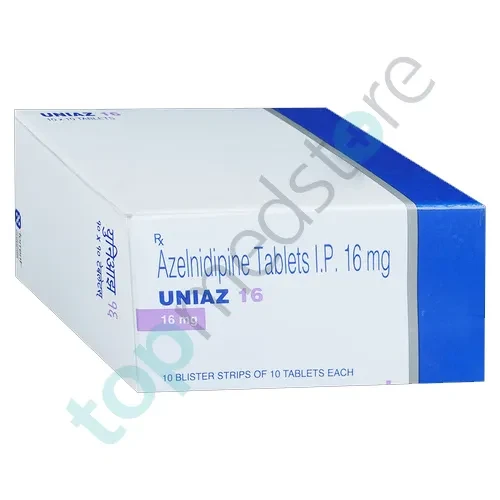
Azelnidipine is a prescription calcium channel blocker medicine used to treat high blood pressure (hypertension). High blood pressure means the force of blood pushing against artery walls is too high for a long time. If not controlled, it can increase the risk of heart attack, stroke, and kidney damage.
Doctors usually prescribe Azelnidipine tablets to help relax blood vessels and improve blood flow.
A cardiologist (heart specialist) or general physician may prescribe this medicine after checking blood pressure levels and heart health.
Azelnidipine belongs to the calcium channel blocker group.
A calcium channel blocker is a medicine that relaxes blood vessels by reducing the effect of calcium on blood vessel muscles.
Azelnidipine works by relaxing the blood vessels.
Blood vessels have muscle walls. When these muscles tighten, blood pressure increases. When they relax, blood flows more easily and blood pressure decreases.
Calcium is needed for blood vessel muscles to contract. Azelnidipine blocks calcium from entering these muscle cells. This helps the muscles relax.
When blood vessels relax, they become wider. This allows blood to flow more smoothly and reduces pressure inside the vessels.
As blood pressure decreases, the heart does not need to work as hard. This helps protect the heart, brain, and kidneys from long-term damage.
This medicine works gradually and is usually taken once daily for long-term blood pressure control.
Doctors mainly use Azelnidipine for high blood pressure (hypertension).
It helps control long-term blood pressure and reduces the risk of serious complications like stroke, heart attack, and kidney disease.
A cardiologist may prescribe it when blood pressure remains high even after lifestyle changes or other medicines.
It may also be used as part of combination therapy with other blood pressure medicines for better control.
Azelnidipine is not used for sudden blood pressure emergencies. It is meant for regular long-term management.
Azelnidipine works by blocking calcium entry into the smooth muscles of blood vessels.
Calcium normally causes blood vessels to tighten. When calcium enters these muscle cells, the vessels become narrow and blood pressure increases.
Azelnidipine blocks this calcium movement. This allows blood vessels to relax and widen.
When blood vessels widen, blood flows more easily, and pressure on artery walls reduces.
This helps lower both systolic and diastolic blood pressure in a steady way.
It also reduces the workload on the heart, which helps protect heart health over time.
Doctors may adjust the dose depending on blood pressure response.
Like all medicines, Azelnidipine may cause side effects. Most are mild and improve with time.
Common side effects include headache, dizziness, flushing (warm feeling in the face), and swelling in the ankles or feet.
Dizziness means feeling lightheaded or unsteady.
Flushing means warmth and redness in the face or neck due to widened blood vessels.
Some people may also feel tired or notice mild heart palpitations.
Rare but serious side effects include very low blood pressure, severe dizziness, or irregular heartbeat.
Patients should rise slowly from sitting or lying positions to avoid dizziness.
A cardiologist or doctor should monitor blood pressure regularly during treatment.
This content is for educational purposes only. It does not replace professional medical advice. Always consult a cardiologist or qualified doctor before using Azelnidipine. Use this medicine only under proper medical supervision.
| Product name | Azelnidipine |
|---|---|
| Category | Blood Pressure Medicines |
| Shipping offer | Free shipping on orders of $110.00 or more |
$50.40 – $129.92
$75.00 – $192.00
$35.28 – $89.60
$18.30 – $46.80