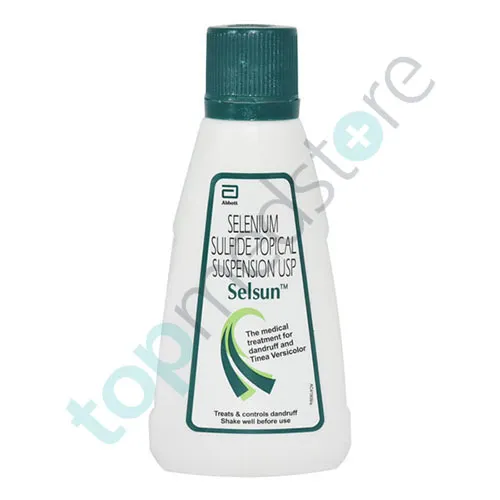
Selenium Sulfide 2.5%-60ml (Topical Suspension)
$30.93 – $101.16
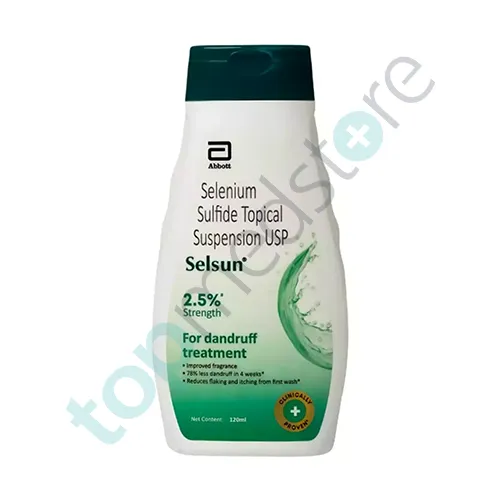
| Product name | Selenium Sulfide 2.5%-120ml (Topical Suspension) |
|---|---|
| Active Ingredient | Selenium Sulfide |
| Dosage | 2.5%-120ml |
| Drug Type | Bottles |
| Indication | Dandruff |
| Manufacturer | Abbott |
Selenium Sulfide 2.5%-120ml Topical Suspension
In stock
Total $41.22
Selenium Sulfide 2.5% topical suspension is a medicated skin and scalp treatment used to manage dandruff, seborrheic dermatitis, and fungal skin infections. It helps reduce flaking, itching, and scaling on the scalp and other affected areas.
Dandruff and seborrheic dermatitis happen when the skin produces excess oil and a type of yeast called Malassezia grows on the scalp. This leads to itching, white flakes, redness, and irritation.
This medicine works directly on the scalp to control yeast growth and reduce excess oil buildup.
A dermatologist commonly prescribes this suspension for patients with persistent dandruff or recurring scalp scaling that does not improve with regular shampoos.
It is usually applied externally and should not be swallowed.
Doctors prescribe Selenium Sulfide 2.5% topical suspension mainly for severe dandruff (pityriasis capitis). It helps reduce white flakes, scalp itching, and dryness.
It is also used for seborrheic dermatitis, a condition that causes red, oily, and scaly patches on the scalp, face, or chest.
This medicine may also be used for tinea versicolor, a fungal skin infection that causes light or dark patches on the skin, especially on the back, chest, or shoulders.
In some cases, it is used to control excess oil production on the scalp, which contributes to dandruff formation.
Regular use helps improve scalp health and reduces recurrence of flaking and itching.
Selenium sulfide works by targeting the root causes of dandruff and fungal infections.
It slows down the growth of Malassezia yeast, which is responsible for dandruff and scalp irritation. It also reduces oil production on the scalp.
In simple words, Selenium Sulfide 2.5% helps clean the scalp, control fungus, and reduce excess oil buildup.
It also helps slow down the rapid shedding of skin cells, which reduces flaking and scaling.
With regular use, the scalp becomes healthier, less itchy, and less prone to dandruff formation.
This medicine is for external use only and should be applied exactly as directed by a doctor.
First, shake the bottle well before use. Apply a small amount to the affected area, usually the scalp.
Massage gently and leave it on for a few minutes to allow the medicine to work. Then rinse thoroughly with water.
It is usually used twice a week or as prescribed, depending on the severity of the condition.
A dermatologist may adjust the frequency based on skin response and improvement.
Avoid contact with eyes, nose, and mouth during application.
Most people tolerate this medicine well when used correctly. However, some mild side effects may occur.
Common side effects include skin dryness, mild irritation, or temporary scalp oiliness.
Some patients may feel itching or slight burning sensation after application, especially if the skin is sensitive.
In rare cases, hair may become slightly dry or brittle with long-term use.
Very rarely, allergic reactions such as redness, rash, or swelling may occur and should be reported to a doctor.
Most side effects are mild and reduce when usage is adjusted properly.
This medicine should be used only on the scalp or affected skin areas, not on broken or irritated skin unless advised by a doctor.
Avoid contact with eyes. If it accidentally gets into the eyes, rinse immediately with plenty of water.
Do not use more frequently than prescribed, as overuse may cause dryness or irritation.
Patients with sensitive skin or allergies should inform their doctor before using this product.
A dermatologist may recommend combining this treatment with medicated shampoos or antifungal creams for better results.
Regular use as prescribed helps prevent dandruff from coming back.
This content is for informational purposes only. Selenium Sulfide 2.5% topical suspension should be used only under the supervision of a qualified dermatologist or healthcare professional. Do not start, stop, or change treatment without medical advice.
$30.93 – $101.16
$134.00 – $440.00
$96.00 – $314.24
$120.12 – $393.12