Celecoxib 200mg
$28.50 – $92.40
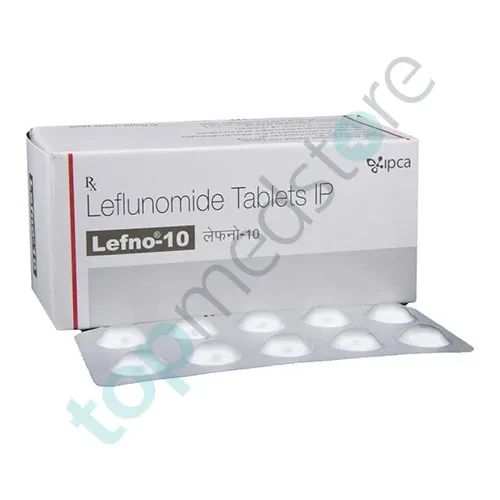
| Product name | Leflunomide 10mg |
|---|---|
| Active Ingredient | Leflunomide |
| Dosage | 10mg |
| Drug Type | Tablets |
| Indication | Rheumatoid Arthritis |
| Manufacturer | Ipca |
Total $122.00
Leflunomide 10mg is a prescription medicine used mainly for rheumatoid arthritis, psoriatic arthritis, and other autoimmune joint diseases. It belongs to a group of medicines called DMARDs (Disease-Modifying Anti-Rheumatic Drugs). These medicines help control the disease process and reduce long-term joint damage.
Rheumatoid arthritis is a chronic disease where the body’s immune system attacks healthy joints by mistake. This causes joint pain, swelling, stiffness, warmth, and difficulty moving. If not treated properly, it can slowly damage the joints permanently.
Doctors prescribe Leflunomide 10mg to reduce inflammation, improve movement, and protect joints from future damage. It is commonly prescribed by rheumatologists, who are doctors specializing in arthritis and autoimmune diseases.
Unlike regular painkillers, this medicine works on the immune system itself. It helps slow disease progression instead of only masking pain temporarily.
After taking Leflunomide 10mg, the medicine enters the bloodstream and starts working on the immune system.
In autoimmune diseases, immune cells become too active and attack healthy tissues inside the joints. This creates continuous inflammation and damages cartilage and bone over time.
Leflunomide works by slowing down the growth and activity of these overactive immune cells.
Immune cells need certain substances to grow and multiply. Leflunomide blocks an enzyme needed to produce these substances. Because of this, the immune cells become less aggressive.
As inflammation decreases, symptoms like joint swelling, joint stiffness, pain, and tenderness gradually improve.
Many patients also notice better flexibility and easier movement after regular treatment.
This medicine works slowly. Improvement usually develops over several weeks because it treats the disease process itself.
Doctors mainly prescribe Leflunomide 10mg for rheumatoid arthritis.
Leflunomide helps reduce symptoms such as joint pain, morning stiffness, swollen joints, and reduced mobility.
It is also used in some patients with psoriatic arthritis, where joint inflammation happens along with psoriasis skin disease.
This medicine helps slow the destruction of cartilage and bones inside the joints. This is important because long-term inflammation can permanently affect hand function, walking, and daily activities.
Doctors may use this medicine alone or together with other arthritis medicines depending on the severity of symptoms.
Many patients take Leflunomide for long-term disease control under regular medical supervision.
Leflunomide works by controlling abnormal immune system activity.
Normally, the immune system protects the body from bacteria and viruses. In autoimmune diseases, the immune system mistakenly attacks healthy joints.
These immune cells release inflammatory chemicals that cause swelling, redness, pain, and tissue damage.
Leflunomide blocks an enzyme involved in making pyrimidine, which immune cells need for growth.
Without enough pyrimidine, immune cells cannot multiply quickly.
This reduces inflammation inside the joints and slows disease progression.
Over time, this helps reduce joint damage, improve movement, and lower stiffness and pain.
Because the medicine works slowly, patients may need several weeks before noticing full improvement.
Like many immune-system medicines, Leflunomide 10mg may cause side effects and requires regular monitoring.
Leflunomide commonly causes diarrhea, nausea, stomach discomfort, headache, or mild hair thinning.
Some patients may also experience high blood pressure, mild weight changes, or reduced appetite.
Because the medicine affects the immune system, some people may develop infections more easily.
Doctors usually perform regular blood tests and liver function tests during treatment to monitor safety.
Less common side effects include skin rash, dizziness, weakness, or tingling sensations.
Rare but serious side effects include severe liver problems, breathing difficulty, lung inflammation, or major changes in blood cell counts. These require immediate medical attention.
Patients are usually advised to avoid heavy alcohol intake and follow regular medical follow-ups during treatment.
This content is for educational purposes only. It does not replace medical advice, diagnosis, or treatment. Always consult a rheumatologist or healthcare professional before using Leflunomide. Use this medicine only as prescribed and attend regular follow-ups and blood tests for safe and effective treatment of autoimmune joint diseases.
$28.50 – $92.40
$18.90 – $62.40
$16.50 – $54.00
$117.00 – $384.00