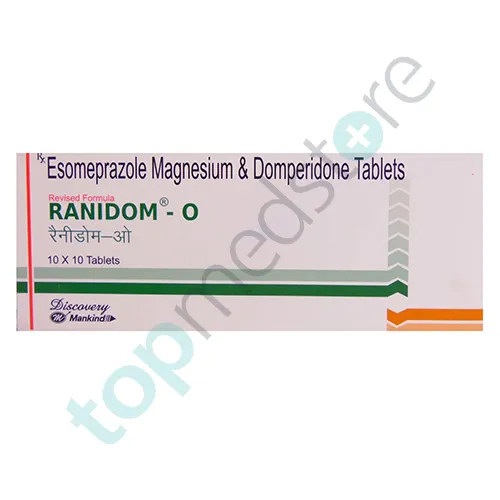
Esomeprazole-Domperidone 40mg-30mg
$59.40 – $194.40
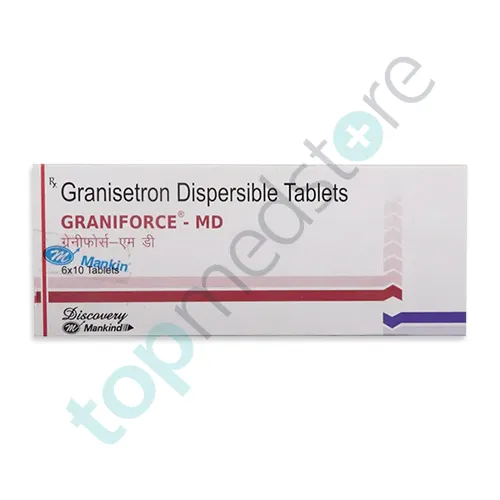
| Product name | Granisetron 1mg |
|---|---|
| Active Ingredient | Granisetron |
| Dosage | 1mg |
| Drug Type | Tablets |
| Indication | Nausea and Vomiting |
| Manufacturer | Mankind Pharma Ltd |
Total $103.10
Granisetron 1mg is a prescription anti-nausea medicine used to prevent and control nausea and vomiting caused by strong medical treatments like chemotherapy, radiation therapy, or surgery.
The active ingredient is Granisetron, which belongs to a group of medicines called 5-HT3 receptor antagonists. These medicines are specially designed to block signals in the body that trigger vomiting.
Doctors, especially oncologists (cancer treatment specialists), often prescribe this medicine as part of supportive care. Supportive care means treatment that helps reduce side effects of cancer therapy and improves patient comfort.
This medicine does not treat the disease itself. Instead, it helps the patient tolerate treatment better by controlling severe nausea.
Granisetron 1mg works by stopping nausea signals before they reach the brain.
During treatments like chemotherapy, the body releases a chemical called serotonin (5-hydroxytryptamine or 5-HT) in the stomach and intestines.
This serotonin activates special receptors called 5-HT3 receptors. When these receptors are activated, they send strong signals to the brain’s vomiting center.
This leads to nausea, vomiting, and stomach discomfort.
Granisetron blocks these 5-HT3 receptors. When the receptors are blocked, serotonin cannot send vomiting signals.
This interruption helps reduce or completely prevent nausea and vomiting episodes.
Because it works on both the gut (digestive system) and the brain (vomiting center), it gives strong and reliable control of nausea.
Granisetron 1mg is mainly used for the prevention and treatment of severe nausea and vomiting.
It is most commonly used in chemotherapy-induced nausea and vomiting (CINV). Cancer medicines can strongly irritate the stomach and brain, leading to repeated vomiting. This medicine helps control that effect.
It is also used in radiotherapy-induced nausea, which can occur when radiation therapy affects the digestive system and triggers vomiting signals.
Doctors may prescribe it for post-operative nausea and vomiting (PONV), which happens after surgery due to anesthesia and body stress.
In some cases, it may be used when patients experience severe nausea from medical treatments that strongly affect the stomach or brain.
It is not used for normal stomach upset, mild indigestion, or food-related nausea.
Granisetron works by blocking serotonin (5-HT3) receptors, which play a key role in triggering vomiting.
Under normal conditions, serotonin helps control digestion. But during chemotherapy or surgery, too much serotonin is released in the gut.
This excess serotonin binds to 5-HT3 receptors located in the intestinal lining and brainstem.
Once these receptors are activated, they send a strong signal to the brain’s vomiting center.
Granisetron 1mg blocks these receptors so serotonin cannot attach to them.
When this connection is blocked, the vomiting signal is stopped at an early stage.
As a result, the brain does not trigger nausea or vomiting, and the patient feels more comfortable during treatment.
This targeted action makes it a very important medicine in cancer care and post-surgery recovery.
Granisetron 1mg is generally well tolerated, but some side effects may occur in certain individuals.
Common side effects include headache, mild constipation, and dizziness. These effects are usually temporary and mild.
Some people may feel tired or weak during treatment.
Occasionally, mild stomach discomfort or bloating may occur.
Less commonly, small changes in liver enzyme levels can be seen, especially in patients receiving long-term treatment.
Rare but serious side effects include allergic reactions such as skin rash, swelling, or difficulty breathing. These require immediate medical attention.
In very rare cases, it may affect heart rhythm, especially in patients with existing heart conditions or those taking interacting medicines.
Because of its use in sensitive treatments like chemotherapy, it is usually given under close supervision of an oncologist.
This content is for educational purposes only. It is not a substitute for professional medical advice, diagnosis, or treatment. Always consult an oncologist or qualified healthcare professional before using Granisetron 1mg. Use this medicine only under proper medical supervision.
$59.40 – $194.40
$185.50 – $608.00
$172.00 – $562.00
$34.20 – $112.80