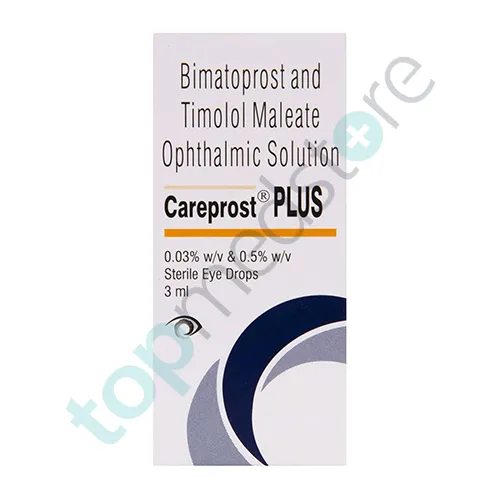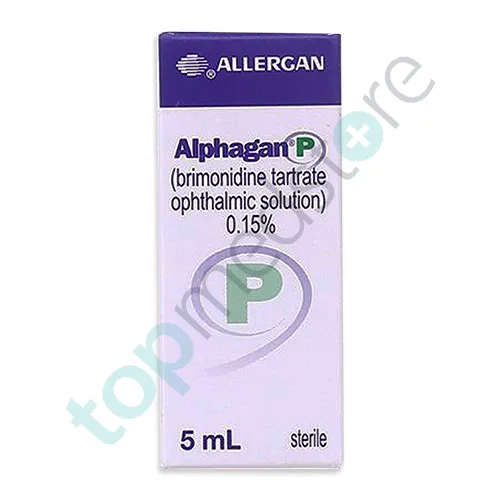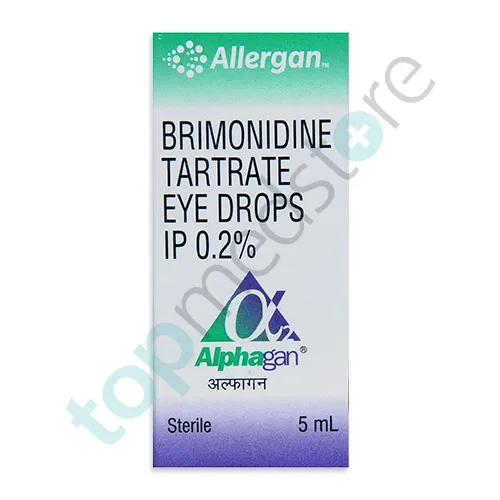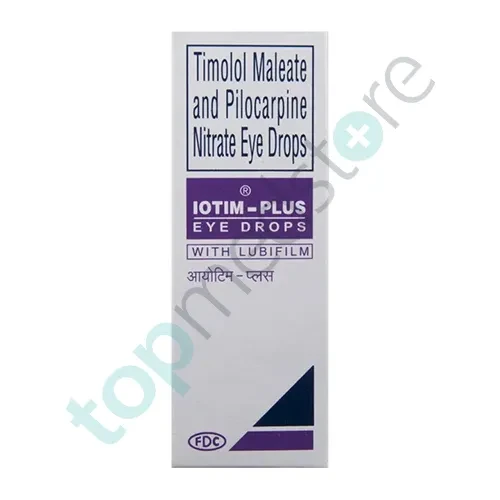
Pilocarpine-Timolol 0.2%-0.5% Eye Drops 5ml
$58.74 – $192.24
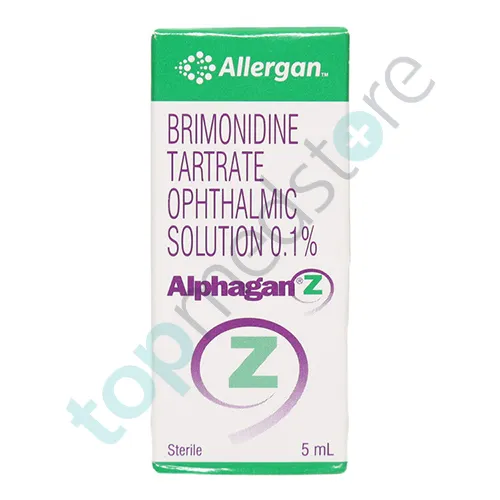
| Product name | Brimonidine 0.1%-5ml |
|---|---|
| Active Ingredient | Brimonidine |
| Dosage | 0.1% 5ml |
| Drug Type | Bottles |
| Indication | Open-Angle Glaucoma |
| Manufacturer | Allergan |
Total $60.06
Brimonidine 0.1% eye drops is a prescription ophthalmic medicine used to reduce high pressure inside the eye. It is commonly prescribed by an eye specialist (ophthalmologist) to manage conditions where eye pressure becomes higher than normal and may affect vision over time.
This medicine comes as a sterile eye drop solution (5ml bottle) and is applied directly into the eyes. It works locally in the eye and has minimal action on other parts of the body when used correctly.
In simple words, Brimonidine 0.1% helps lower eye pressure and protects the optic nerve from damage.
Inside the eye, there is a clear fluid called aqueous humor that maintains eye shape and pressure.
Sometimes, this fluid builds up or does not drain properly, leading to increased eye pressure. If this pressure stays high for a long time, it can damage the optic nerve, which is responsible for vision.
Brimonidine works by reducing the production of this fluid and increasing its drainage from the eye.
In simple terms, this medicine helps balance fluid levels inside the eye and reduces pressure safely.
Doctors prescribe Brimonidine 0.1% mainly for glaucoma and ocular hypertension.
Glaucoma is a condition where increased eye pressure slowly damages the optic nerve. If not treated, it can lead to gradual vision loss.
Ocular hypertension means higher-than-normal eye pressure without visible damage yet, but it increases the risk of developing glaucoma in the future.
This medicine is used to control eye pressure and reduce the risk of vision damage.
It may also be used as part of combination eye therapy, where more than one eye drop is needed to control pressure effectively.
Brimonidine belongs to a group of medicines called alpha-2 adrenergic agonists.
It works in two main ways inside the eye:
First, it reduces the production of aqueous humor, which is the fluid that increases eye pressure.
Second, it improves the outflow (drainage) of fluid from the eye.
In simple words, this medicine reduces fluid buildup and helps excess fluid drain out, which lowers eye pressure.
By controlling pressure, it helps protect the optic nerve and long-term vision health.
Some patients may experience mild side effects after using this eye drop.
A common effect is eye redness or irritation, which means slight discomfort or burning after application.
Some people may feel dry mouth, which means reduced saliva and a dry feeling in the mouth.
Blurred vision may occur temporarily right after applying the drops, but it usually improves quickly.
In some cases, itching or watery eyes may happen.
Less commonly, headache, fatigue, or dizziness may occur.
Rarely, allergic reactions such as eye swelling or increased redness can develop and should be reported to a doctor immediately.
Most side effects are mild and temporary when used correctly.
Brimonidine 0.1% should be used exactly as prescribed by an eye specialist (ophthalmologist).
Avoid touching the dropper tip to the eye or any surface to prevent contamination.
If using other eye drops, maintain a gap of at least 5–10 minutes between medications.
Do not drive immediately after application if you experience temporary blurred vision.
Inform your doctor if you have heart disease, low blood pressure, depression, or kidney issues, as monitoring may be required.
Remove contact lenses before using the drops and reinsert them after some time if advised.
If prescribed, use Brimonidine 0.1% (5ml) only from trusted pharmacy sources.
Brimonidine 0.1% eye drops are a prescription medicine. They should only be used under the supervision of an eye specialist (ophthalmologist). This content is for informational purposes only and does not replace medical advice, diagnosis, or treatment. Always consult your doctor before starting or changing any medicine.
$58.74 – $192.24
$89.08 – $291.52
$69.27 – $226.68
$79.17 – $259.08