Prazosin ER 5mg
$88.20 – $288.00
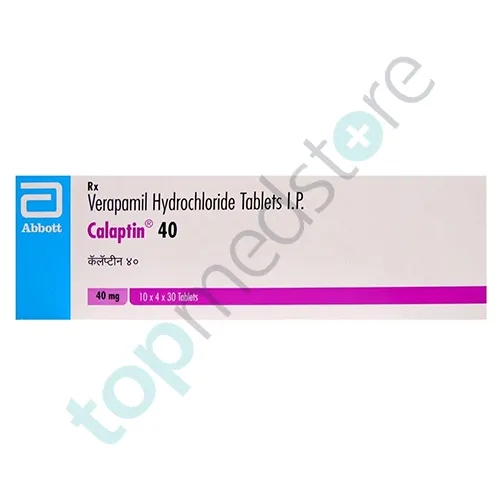
| Product name | Verapamil 40mg |
|---|---|
| Active Ingredient | Verapamil |
| Dosage | 40mg |
| Drug Type | Tablets |
| Indication | Hypertension |
| Manufacturer | Abbott |
Total $39.60
Verapamil 40mg is a prescription medicine used to treat high blood pressure, chest pain (angina), and certain heart rhythm problems. It belongs to a group of medicines called calcium channel blockers.
Calcium is a mineral that helps muscles, including heart muscles and blood vessel walls, contract. When too much calcium enters these cells, blood vessels become tight and the heart may work harder than normal.
Doctors prescribe Verapamil tablets to relax blood vessels and improve blood flow. This helps reduce pressure on the heart and improves overall heart function.
Cardiologists commonly use this medicine. A cardiologist is a doctor who treats heart and blood vessel diseases.
Many patients take Verapamil 40mg for long-term control of blood pressure and heart-related symptoms.
Verapamil 40mg works by blocking calcium from entering heart and blood vessel cells. Calcium is needed for muscle contraction, so when calcium entry is reduced, muscles relax.
This relaxation causes blood vessels to widen. Wider blood vessels allow blood to flow more easily, which helps lower blood pressure.
The medicine also reduces the workload of the heart. When the heart does not need to pump against high pressure, it becomes more efficient and uses less oxygen.
This is especially helpful for patients with angina, which is chest pain caused by reduced blood flow to the heart muscle.
Verapamil tablets also slow down electrical signals in the heart. This helps control abnormal heart rhythms and keeps the heartbeat more stable.
As blood flow improves and heart strain reduces, patients may feel less chest discomfort, fewer palpitations, and better exercise tolerance.
Doctors prescribe Verapamil 40mg mainly for the treatment of high blood pressure (hypertension). High blood pressure puts extra strain on the heart and blood vessels over time.
This medicine is also used for angina, a condition where the heart does not receive enough oxygen-rich blood. Angina can cause chest tightness, pain, or pressure, especially during physical activity or stress.
Doctors also use Verapamil tablets to treat certain heart rhythm disorders, especially conditions like supraventricular tachycardia (SVT). SVT causes a fast and irregular heartbeat.
In some cases, the medicine is used for prevention of migraine headaches. It may help reduce the frequency of migraine attacks by stabilizing blood vessel activity in the brain.
Healthcare professionals may also prescribe Verapamil 40mg for other heart-related conditions where controlling heart rate and blood pressure is important.
Verapamil 40mg works by blocking calcium channels in the heart and blood vessels.
Calcium normally helps muscles tighten and contract. When calcium entry is blocked, these muscles relax.
In blood vessels, this relaxation causes widening, which improves blood flow and reduces pressure inside the arteries.
In the heart, Verapamil tablets slow down electrical signals that control heartbeat. This helps regulate fast or irregular heart rhythms.
By reducing heart workload and improving oxygen supply, the medicine helps protect the heart and reduce symptoms like chest pain.
Doctors usually prescribe a specific dose based on blood pressure, heart condition, and patient response.
Patients should take Verapamil 40mg regularly as prescribed. Missing doses may reduce its effectiveness in controlling heart conditions.
Like all medicines, Verapamil 40mg may cause side effects in some people. Most side effects are mild and may improve with continued use.
Common side effects include dizziness, headache, constipation, tiredness, and low blood pressure. Constipation means difficulty in passing stools.
Some patients may feel lightheaded, especially when standing up quickly. This happens due to lowered blood pressure.
In some cases, Verapamil tablets may slow the heart rate too much, leading to fatigue or weakness.
Rare but serious side effects include severe dizziness, fainting, very slow heartbeat, swelling in the legs, or breathing difficulty. These require immediate medical attention.
Patients with heart failure, liver disease, or very low blood pressure should inform their doctor before using this medicine.
Alcohol may increase side effects like dizziness and low blood pressure, so it should be used with caution.
This content is for educational purposes only. It does not replace medical advice, diagnosis, or treatment. Always consult a cardiologist or healthcare professional before starting or stopping Verapamil 40mg. Use this medicine only under proper medical supervision.
$88.20 – $288.00
$87.00 – $284.00
$28.50 – $93.60
$39.90 – $130.80