Trientine Hydrochloride 250mg
$1755.00 – $5743.20
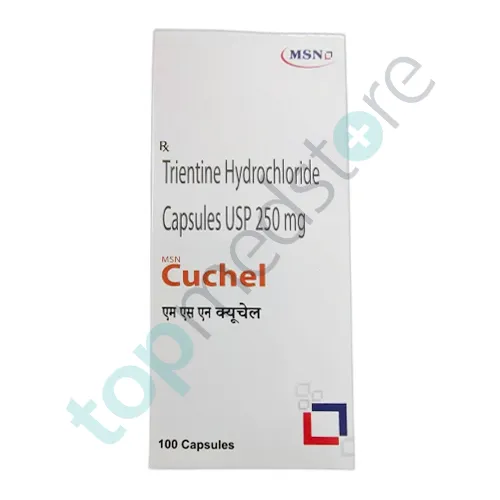
Trientine Hydrochloride is a prescription medicine used to treat Wilson’s disease. A hepatologist or neurologist usually prescribes this medicine. A hepatologist is a doctor who treats liver diseases. A neurologist treats brain and nerve disorders.
Wilson’s disease is a rare genetic disorder in which the body cannot remove extra copper properly. Copper is a mineral that the body needs in very small amounts. When too much copper builds up, it can damage the liver, brain, eyes, and other organs.
Patients with Wilson’s disease may develop symptoms such as liver problems, tremors, difficulty speaking, mood changes, or movement problems.
Trientine Hydrochloride helps remove extra copper from the body and lowers toxic copper levels.
The medicine belongs to a group called chelating agents. Chelating agents bind harmful metals and help remove them through urine.
Doctors usually prescribe this medicine for long-term treatment and regular monitoring.
Trientine Hydrochloride works by attaching to excess copper inside the body.
Normally, the liver removes extra copper through bile and waste. In Wilson’s disease, this process does not work properly.
As copper builds up, it slowly damages organs and tissues.
Trientine binds with free copper in the bloodstream and tissues. After binding, the copper becomes easier for the body to remove through urine.
This helps lower toxic copper levels and reduces further organ damage.
By decreasing copper accumulation, the medicine helps protect the liver, brain, nerves, and other organs from long-term injury.
Regular treatment may improve symptoms and slow disease progression.
Doctors prescribe Trientine Hydrochloride mainly for Wilson’s disease treatment.
The medicine helps reduce copper buildup in patients who cannot remove copper normally.
Some patients receive this medicine when another copper-removing medicine called penicillamine causes side effects or is not tolerated properly.
Doctors may use Trientine for long-term maintenance therapy to keep copper levels under control.
The medicine may help improve liver function, movement problems, speech difficulty, and neurological symptoms linked with copper toxicity.
Long-term treatment is important because Wilson’s disease is a lifelong condition that requires continuous copper management.
Patients usually need regular blood tests and urine tests during treatment.
Trientine Hydrochloride works as a copper-binding medicine called a chelator.
After absorption into the body, the medicine attaches to excess copper molecules.
This forms a stable complex that can be removed through urine.
As copper levels decrease, copper-related tissue damage also reduces.
Lower copper accumulation helps improve liver health and protects the nervous system from further injury.
The medicine does not cure Wilson’s disease, but it helps control copper buildup and reduces complications.
Doctors may also recommend dietary changes, such as limiting foods high in copper. Foods high in copper include shellfish, nuts, chocolate, mushrooms, and liver.
Treatment usually requires lifelong monitoring and follow-up care.
Like all medicines, Trientine Hydrochloride may cause side effects, although many are manageable.
Some patients may experience nausea, stomach pain, or loss of appetite during treatment.
Skin rash or mild allergic reactions may also occur in certain people.
Because the medicine changes copper balance inside the body, some patients may temporarily notice worsening neurological symptoms during early treatment.
Low iron levels or anemia may develop during long-term therapy because Trientine can affect mineral absorption.
Doctors may monitor blood counts and mineral levels regularly.
Rarely, severe allergic reactions or kidney-related problems may occur.
Patients should seek immediate medical help if they develop severe weakness, difficulty breathing, swelling, or serious skin reactions.
Regular medical monitoring helps maintain safe copper control and reduces treatment complications.
This content is for informational purposes only. It does not replace professional medical advice, diagnosis, or treatment. Always consult a hepatologist, neurologist, or healthcare professional before starting or changing Trientine Hydrochloride treatment. Use this medicine only as prescribed and attend regular blood and urine monitoring appointments for safe long-term Wilson’s disease management.
| Product name | Trientine Hydrochloride |
|---|---|
| Category | Other Specialized Care |
| Shipping offer | Free shipping on orders of $110.00 or more |
$1755.00 – $5743.20
$65.00 – $212.00