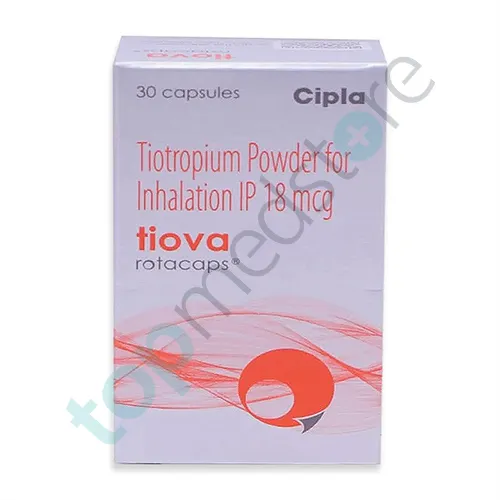
Tiotropium Bromide 18mcg
$144.00 – $470.40
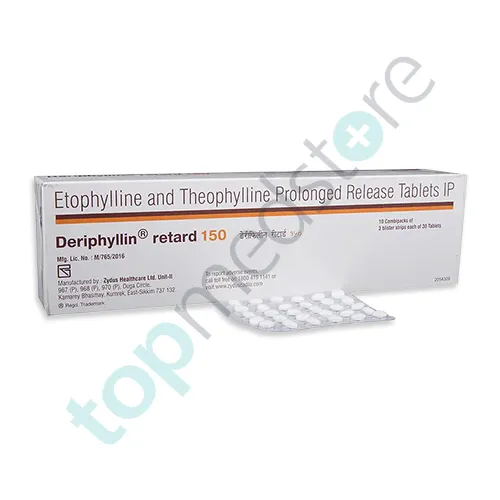
| Product name | Theophylline-Etofylline 150mg |
|---|---|
| Active Ingredient | Theophylline-Etofylline |
| Dosage | 150mg |
| Drug Type | Tablets |
| Indication | Asthma |
| Manufacturer | Zydus Health |
Total $13.80
Theophylline and Etofylline 150mg is a combination medicine used to help people breathe more easily in asthma and chronic lung diseases.
It works as a bronchodilator, which means it helps open the airways in the lungs.
Asthma and COPD (chronic obstructive pulmonary disease) are conditions where the airways become narrow and make breathing difficult. Patients may feel chest tightness, wheezing, cough, or shortness of breath.
Doctors prescribe this medicine to improve airflow and reduce breathing discomfort over time.
Pulmonologists and general physicians commonly use this combination for long-term breathing support.
It is usually used as part of a regular treatment plan, not for sudden emergency attacks.
After taking Theophylline–Etofylline 150mg, the medicine starts working on the airways in the lungs.
The airways are small tubes that carry air in and out of the lungs. In asthma or COPD, these tubes become narrow due to muscle tightening and inflammation.
This medicine relaxes the muscles around the airways.
When these muscles relax, the airways become wider.
Wider airways allow more air to flow into the lungs, making breathing easier.
It also helps reduce chest tightness and improves oxygen flow in the body.
The effect develops gradually and helps maintain smoother breathing throughout the day.
Doctors may adjust the dose carefully because the medicine needs balanced levels in the body for safe use.
Doctors prescribe Theophylline–Etofylline 150mg mainly for respiratory conditions that cause breathing difficulty.
It is commonly used in asthma, where airways become sensitive and narrow due to triggers like dust, smoke, cold air, or allergies.
It is also used in COPD, a long-term lung disease often linked to smoking or long-term lung damage.
The medicine helps reduce symptoms like wheezing, shortness of breath, and chest tightness.
It may also help improve exercise tolerance in people with chronic breathing problems.
Doctors usually prescribe it when inhalers alone are not enough to control symptoms.
It is used as a maintenance medicine, which means it helps keep symptoms under control regularly.
Theophylline and Etofylline work by relaxing the muscles in the airways.
These medicines belong to a group called methylxanthines, which act on the respiratory system.
They help relax smooth muscles around the bronchial tubes.
When these muscles relax, the airways open up more easily.
This improves airflow in and out of the lungs.
Theophylline also helps improve breathing strength by supporting the respiratory muscles.
Etofylline supports this effect and may help reduce side effects while improving tolerance.
Together, they provide better and smoother breathing control in chronic lung conditions.
Doctors carefully monitor dosage because small changes can affect effectiveness and safety.
Like all medicines, Theophylline–Etofylline 150mg may cause side effects in some patients.
Common side effects include:
nausea, vomiting, stomach discomfort, headache, restlessness, or mild dizziness.
Some patients may feel difficulty sleeping or increased heart rate.
These effects are more likely if the dose is high or not well balanced.
Rare but serious side effects include:
irregular heartbeat, severe vomiting, seizures, chest pain, or severe nervousness.
Very high levels of the medicine in the body can be dangerous and require immediate medical attention.
Patients should avoid excess caffeine because it may increase side effects like restlessness and palpitations.
Doctors may monitor blood levels in long-term treatment to ensure safety.
This content is for educational purposes only. It does not replace medical advice, diagnosis, or treatment. Always consult a pulmonologist or healthcare professional before using Theophylline–Etofylline 150mg. Use this medicine only as prescribed and follow proper monitoring for safe and effective treatment.
$144.00 – $470.40
$125.40 – $410.40
$132.00 – $432.00