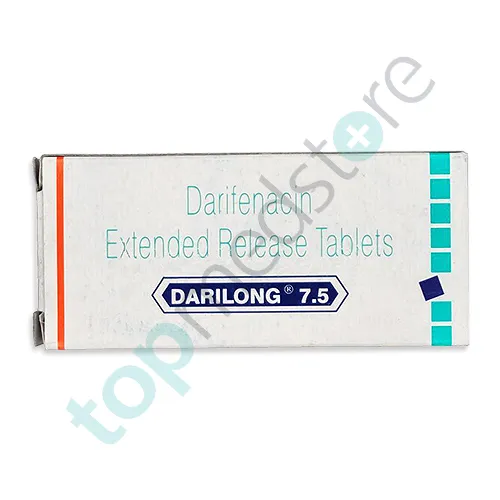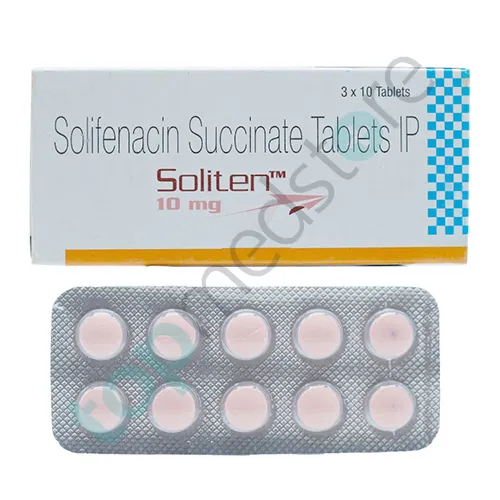
Solifenacin 10mg
$47.70 – $156.00
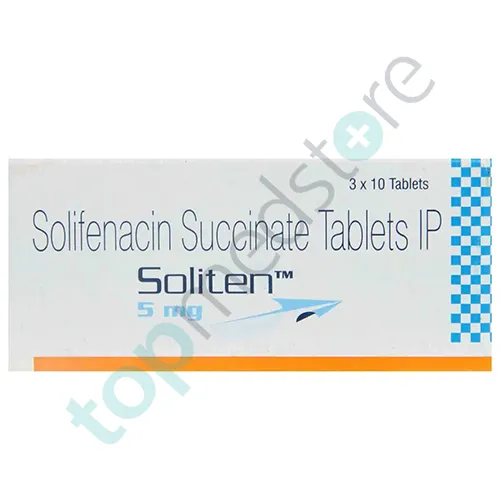
Solifenacin is a prescription medicine used to treat overactive bladder (OAB), a condition where the bladder becomes too sensitive and sends frequent or urgent signals to urinate. A urologist usually prescribes this medicine. A urologist is a doctor who treats problems of the urinary system, including bladder and kidneys.
In overactive bladder, the bladder muscles contract even when the bladder is not full. This creates sudden urgency, frequent urination, and sometimes accidental urine leakage.
Solifenacin helps control these symptoms and improves daily comfort and confidence in bladder control.
It is usually available as oral tablets and is taken once daily.
Solifenacin works by calming the muscles of the bladder.
The bladder stores urine until it is time to urinate. In normal conditions, the bladder only contracts when it is full.
In overactive bladder, the muscles send false signals and contract too early. This causes frequent trips to the bathroom and sudden urgency.
Solifenacin blocks a chemical messenger called acetylcholine. This chemical normally tells the bladder to squeeze and release urine.
By blocking this signal, the bladder muscles become more relaxed and stable.
This helps the bladder hold urine for a longer time. It also reduces sudden urges that feel difficult to control.
Over time, patients may notice fewer bathroom visits during the day and improved sleep at night because nighttime urination also reduces.
The medicine does not cure the condition permanently, but it helps manage symptoms effectively when used regularly.
Doctors prescribe Solifenacin mainly for bladder control problems caused by muscle overactivity.
It is commonly used in overactive bladder syndrome (OAB), where patients feel sudden and frequent urges to urinate even when the bladder is not full.
It is also used in urge incontinence, a condition where urine leakage happens due to a strong and uncontrollable urge.
Some patients also benefit in nocturia, a condition where a person wakes up multiple times at night to urinate, which disturbs sleep quality.
In certain cases, doctors may use Solifenacin for bladder irritation problems where muscle spasms are the main cause of symptoms.
This medicine is usually part of a long-term treatment plan that may also include bladder training, fluid management, and lifestyle changes.
Solifenacin works by targeting specific receptors in the bladder called muscarinic receptors.
These receptors respond to acetylcholine, a chemical that tells the bladder muscles to contract.
In overactive bladder, these signals become too frequent or too strong, leading to unnecessary bladder contractions.
Solifenacin blocks these receptors and reduces the effect of acetylcholine.
As a result, the bladder muscle becomes more relaxed and less sensitive.
This allows the bladder to store urine properly without sudden pressure or urgency.
The medicine also helps increase bladder capacity, meaning the bladder can hold more urine before the urge to urinate begins.
Patients usually start noticing improvement within a few days, but full benefit may take a few weeks of consistent use.
Doctors may adjust the dose depending on symptom control and side effects.
Like all medicines, Solifenacin may cause side effects, especially during the initial days of treatment.
One of the most common side effects is dry mouth, which happens because the medicine reduces saliva production. This may make speaking or swallowing slightly uncomfortable.
Some people may experience constipation, meaning difficulty in passing stool. This occurs because the medicine can slow down certain muscle movements in the digestive system.
Blurred vision may also occur in some patients, especially when focusing on close objects.
A few people may feel dizziness or mild headache, particularly when starting treatment.
In some cases, patients may notice difficulty in passing urine. This is more likely in people who already have bladder outlet problems.
Rarely, fast heartbeat, confusion, or severe allergic reactions may occur.
Patients should seek medical help immediately if they develop severe difficulty in urination, chest discomfort, swelling, or breathing problems.
Doctors usually monitor patients if long-term treatment is needed to ensure safety and good symptom control.
This content is for informational purposes only and does not replace professional medical advice, diagnosis, or treatment. Always consult a urologist, doctor, or healthcare professional before starting or changing Solifenacin treatment. Use this medicine only as prescribed and follow medical instructions carefully for safe and effective results.
| Product name | Solifenacin |
|---|---|
| Category | Overactive Bladder Medicines |
| Shipping offer | Free shipping on orders of $110.00 or more |
$47.70 – $156.00
$54.90 – $180.00
$54.90 – $180.00
$78.00 – $254.40