
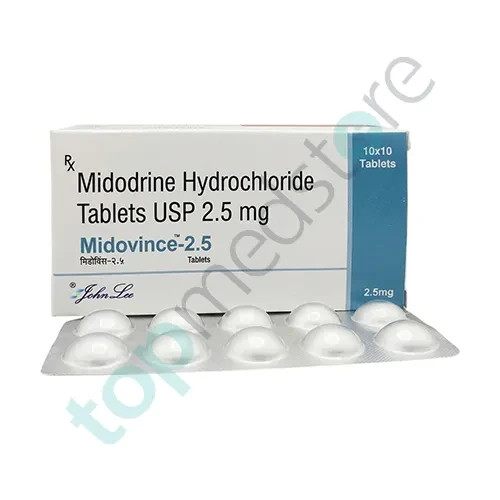
Midodrine 2.5mg
$46.20 – $151.20
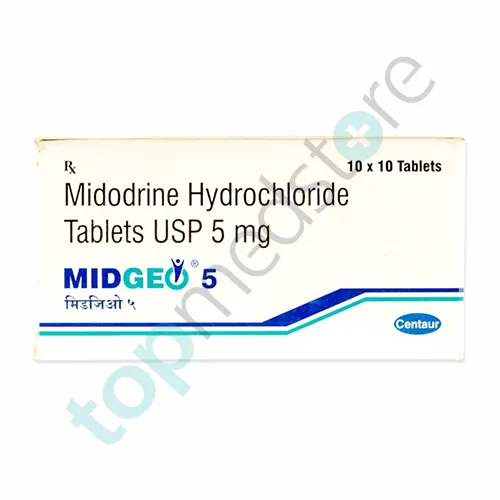
| Product name | Midodrine 5mg |
|---|---|
| Active Ingredient | Midodrine |
| Dosage | .5mg |
| Drug Type | Tablets |
| Indication | Orthostatic Hypotension |
| Manufacturer | Centaur Pharmaceuticals |
Total $85.80
Midodrine 5mg is a prescription medicine used to treat low blood pressure, especially a condition called orthostatic hypotension. Orthostatic hypotension means blood pressure drops suddenly when a person stands up, causing dizziness or fainting.
This medicine belongs to a group of drugs called vasopressors. Vasopressors help increase blood pressure by tightening blood vessels.
Doctors prescribe Midodrine tablets when low blood pressure causes symptoms like lightheadedness, weakness, blurred vision, or fainting episodes. These symptoms can affect daily activities and safety.
A cardiologist or sometimes a general physician may prescribe Midodrine 5mg, depending on the cause of low blood pressure. A cardiologist is a doctor who treats heart and blood circulation problems.
Many patients use this medicine to improve stability while standing, walking, or performing daily tasks without sudden dizziness.
Midodrine 5mg works by tightening blood vessels in the body. Blood vessels are tubes that carry blood through the body.
When blood vessels are too relaxed, blood pressure can drop. This may cause poor blood flow to the brain, leading to dizziness or fainting.
After taking Midodrine tablets, the medicine converts into an active form in the body called desglymidodrine. This active form stimulates certain receptors in blood vessels.
These receptors are called alpha-1 adrenergic receptors. When they are activated, blood vessels become narrower. This narrowing increases blood pressure.
As blood pressure improves, more blood reaches the brain when standing. This reduces symptoms like dizziness, weakness, and fainting.
The medicine works for several hours and is usually taken during the day when symptoms are more likely to occur.
Doctors avoid giving it too close to bedtime because it may increase blood pressure while lying down.
Doctors mainly prescribe Midodrine 5mg for orthostatic hypotension, a condition where blood pressure drops when changing position from sitting or lying to standing.
Patients with this condition may feel dizzy, unsteady, or may faint while standing. Midodrine tablets help reduce these symptoms by improving blood pressure control.
The medicine is also used in people with chronic low blood pressure that does not improve with lifestyle changes like increased fluid intake or salt adjustment.
In some cases, doctors use Midodrine 5mg in patients with nerve-related blood pressure problems. These conditions affect the body’s ability to control blood pressure automatically.
It may also be used in hospital settings for patients who experience severe blood pressure drops due to medical conditions, under strict supervision.
Patients using this medicine often notice improved ability to stand longer, walk safely, and perform daily activities without sudden dizziness.
Midodrine 5mg works by narrowing blood vessels and increasing resistance in the circulation system.
After ingestion, the body converts Midodrine into its active form. This active form acts on alpha-1 receptors found in blood vessel walls.
When these receptors are stimulated, blood vessels tighten. This process is called vasoconstriction. Vasoconstriction means narrowing of blood vessels.
As blood vessels narrow, blood pressure increases. This helps improve blood flow to important organs like the brain.
Because of improved circulation, symptoms like dizziness, fainting, and weakness reduce, especially when standing.
Doctors usually adjust the dose slowly to avoid sudden increases in blood pressure. Monitoring is important to maintain safe and stable levels.
Patients are advised to follow timing instructions carefully because the medicine works best when taken during active daytime hours.
Like all medicines, Midodrine 5mg may cause side effects in some patients. Most side effects are mild and can be managed with dose adjustment.
Common side effects include goosebumps, scalp tingling, urinary retention, chills, and mild stomach discomfort. Urinary retention means difficulty passing urine.
Some patients may experience high blood pressure while lying down, a condition called supine hypertension. This is why doctors advise not taking the medicine close to bedtime.
Other possible effects include headache, dizziness, or skin itching.
Rare but serious side effects may include severe high blood pressure, chest discomfort, slow heartbeat, or difficulty urinating.
Patients should report any strong headache, chest pain, or unusual symptoms to a doctor immediately.
People with heart disease, kidney problems, or urinary issues should inform their doctor before using Midodrine tablets.
This content is for educational purposes only. It does not replace medical advice, diagnosis, or treatment. Always consult a cardiologist or healthcare professional before starting or stopping Midodrine 5mg. Use this medicine only under proper medical supervision.
$46.20 – $151.20
$46.20 – $280.80