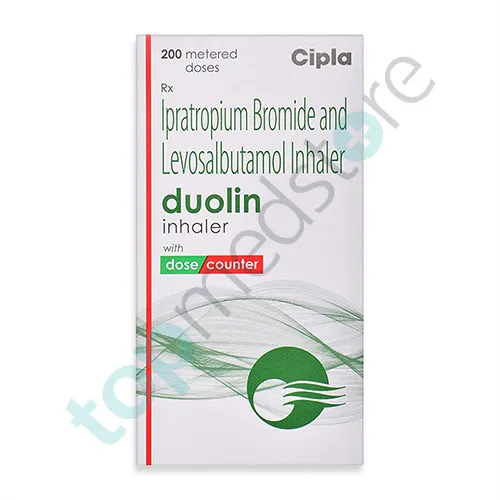
Ipratropium Bromide-LevaSalbutamol 200 Metered Doses
$101.01 – $257.16
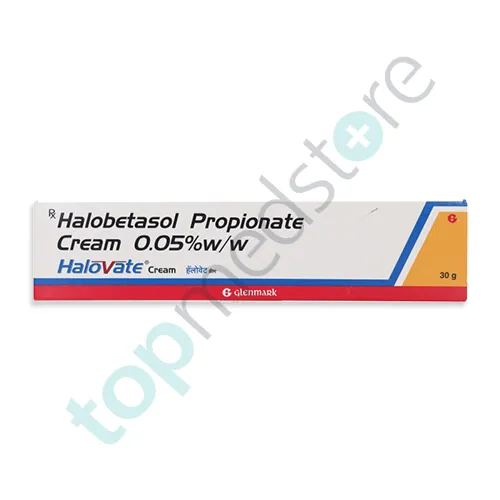
| Product name | Halobetasol Propionate Cream 0.05%-30gm |
|---|---|
| Active Ingredient | Halobetasol Propionate |
| Dosage | 0.05% 30g |
| Drug Type | Tubes |
| Indication | Psoriasis |
| Manufacturer | Glenmark |
Halobetasol Propionate 0.05% 30g Cream
In stock
Total $98.97
Halobetasol Propionate Cream 0.05% is a prescription topical medicine used to treat severe skin inflammation, redness, itching, and swelling caused by certain skin conditions. It is usually prescribed by a dermatologist (skin specialist doctor) when mild creams are not effective.
This medicine belongs to a group called topical corticosteroids (strong anti-inflammatory skin medicines that reduce redness, swelling, and irritation in the skin).
In simple words, this cream helps calm irritated skin and reduces itching, redness, and swelling quickly.
In skin conditions like eczema (a condition where skin becomes dry, itchy, red, and inflamed) or psoriasis (a long-term skin disorder where skin cells grow too fast, causing thick, scaly patches), the immune system becomes overactive in certain areas of the skin.
This overactivity causes inflammation, redness, swelling, and itching.
Halobetasol Propionate works by calming down the overactive immune response in the skin. It reduces the release of chemicals that cause inflammation and irritation.
As inflammation decreases, symptoms like itching, redness, and thickened skin gradually improve.
In simple words, this cream slows down the skin’s overreaction so irritation and redness reduce quickly.
This cream is mainly used for severe skin inflammation conditions such as:
Doctors may prescribe it for short-term control of strong itching, redness, and swelling that does not improve with mild treatments.
In clinical practice, a dermatologist uses this medicine when fast and strong control of skin inflammation is needed.
Halobetasol is a very strong corticosteroid (a type of medicine that reduces inflammation and immune activity in the skin).
It works by blocking the production of inflammatory chemicals in the skin. These chemicals are responsible for redness, swelling, and itching.
When these chemicals are reduced, the skin becomes less inflamed and more comfortable.
It also helps slow down excessive skin cell growth in conditions like psoriasis, reducing thick patches over time.
In simple words, this cream calms the skin’s immune response so redness, itching, and swelling go down quickly.
Some people may experience skin thinning (making the skin more delicate if used for a long time).
There may be burning or stinging sensation at the application site, especially in sensitive skin.
Some individuals may notice dryness or irritation of the skin.
In rare cases, stretch marks or visible small blood vessels on the skin may appear with prolonged use.
Very rarely, skin color changes (lightening or darkening of the treated area) can occur.
Most side effects happen with long-term or overuse and are usually preventable with proper medical guidance.
This medicine should be used only under the supervision of a dermatologist or physician.
Do not use it for long periods without medical advice, as it is a strong steroid.
Avoid applying on the face, groin, or underarms unless specifically advised by a doctor.
Do not cover the treated area with tight bandages unless instructed, as this may increase absorption.
Wash hands after applying the cream unless treating the hands.
Inform your doctor if you notice worsening skin symptoms or no improvement after a few days.
This content is for informational purposes only and does not replace medical advice, diagnosis, or treatment. Always consult your dermatologist or physician before starting or changing any medicine.
$101.01 – $257.16
$47.69 – $156.08
$27.72 – $90.72
$40.26 – $131.76