Citicoline-Piracetam 500mg-800mg
$127.60 – $417.60
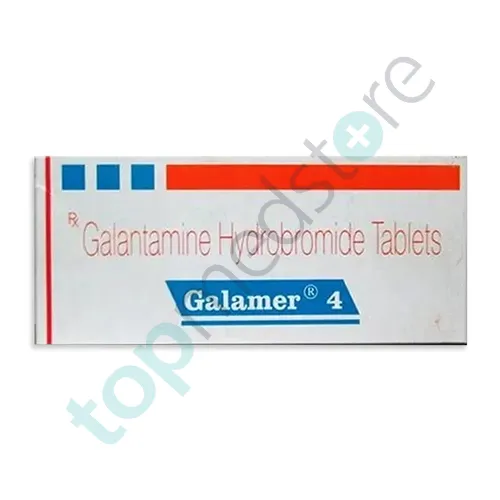
Galantamine is a prescription medicine used to help people with Alzheimer’s disease and memory problems. A neurologist or psychiatrist prescribes this medicine. A neurologist is a doctor who treats diseases of the brain and nerves. A psychiatrist treats mental health and brain-related conditions.
Alzheimer’s disease is a brain disorder that slowly affects memory, thinking, learning, and behavior.
People with Alzheimer’s disease may forget names, repeat questions, lose focus, or struggle with daily activities.
Some patients may also become confused, develop mood changes, or have trouble recognizing familiar people and places.
Galantamine helps improve communication between brain cells and may support memory and mental function.
The medicine does not cure Alzheimer’s disease, but it may help slow worsening of symptoms in some patients.
Galantamine belongs to a group called cholinesterase inhibitors. These medicines increase important brain chemicals linked with memory and learning.
The medicine is available as tablets, capsules, and oral liquid.
Regular treatment may help some patients stay mentally active and manage daily tasks more easily.
Galantamine works by increasing the level of a brain chemical called acetylcholine.
Acetylcholine helps brain cells send messages to each other.
This brain chemical is important for memory, learning, attention, and thinking.
In Alzheimer’s disease, acetylcholine levels become lower because brain cells become damaged over time.
Low acetylcholine levels weaken communication between brain cells and contribute to memory loss and confusion.
Galantamine blocks an enzyme called cholinesterase. This enzyme normally breaks down acetylcholine.
When the enzyme is blocked, acetylcholine stays active longer inside the brain.
Better brain signaling may help improve memory, concentration, and awareness in some patients.
The medicine may also help certain brain receptors work more effectively.
Doctors prescribe Galantamine mainly for mild to moderate Alzheimer’s disease.
The medicine may help improve memory, focus, learning ability, and communication skills.
Some patients may become more alert and active during treatment.
The medicine may also help patients manage simple daily activities more comfortably.
Doctors sometimes use Galantamine for dementia-related symptoms. Dementia is a condition that affects memory, thinking, and behavior.
Family members and caregivers may notice improvement in attention, conversation, or social interaction in some patients.
The medicine works best when combined with supportive care, healthy routines, mental activities, and family support.
Long-term treatment may help slow worsening of symptoms in certain individuals.
Galantamine works by helping brain cells communicate better.
The brain uses acetylcholine to send signals between nerve cells.
Normally, the body quickly breaks down acetylcholine after the signal is sent.
In Alzheimer’s disease, acetylcholine levels are already low.
Galantamine slows the breakdown of acetylcholine and allows it to stay active longer.
This helps improve signal transfer between brain cells.
Better communication between brain cells may support memory, attention, and learning ability.
Doctors usually start treatment with a low dose and increase it slowly. This helps reduce side effects and allows the body to adjust safely.
Patients may need several weeks before noticing improvement.
Regular treatment is important because stopping the medicine suddenly may worsen symptoms.
Like all medicines, Galantamine may cause side effects, although many are mild and temporary.
Some patients may experience nausea, vomiting, diarrhea, or stomach discomfort during treatment.
Loss of appetite and weight loss may also happen in certain people.
Some patients may feel dizzy, weak, sleepy, or tired.
Headache and sleep problems may occur during treatment.
Certain people may experience unusual dreams or mild confusion.
The medicine may slow the heartbeat in some patients, especially older adults or people with heart disease.
Slow heartbeat can increase the risk of dizziness or fainting.
Rarely, serious allergic reactions or heart rhythm problems may occur.
Patients should seek medical help if they develop chest pain, breathing difficulty, fainting, severe vomiting, or severe confusion.
Doctors may monitor body weight, heart health, and mental symptoms during long-term treatment.
This content is for informational purposes only. It does not replace professional medical advice, diagnosis, or treatment. Always consult a neurologist, psychiatrist, or healthcare professional before starting or changing Galantamine treatment. Use this medicine only as prescribed and attend regular medical follow-up appointments for safe memory and cognitive care.
| Product name | Galantamine |
|---|---|
| Category | Alzheimer's Disease Medicines |
| Shipping offer | Free shipping on orders of $110.00 or more |
$127.60 – $417.60
$198.00 – $648.00
$79.20 – $259.20
$87.15 – $285.60