Prazosin ER 5mg
$88.20 – $288.00
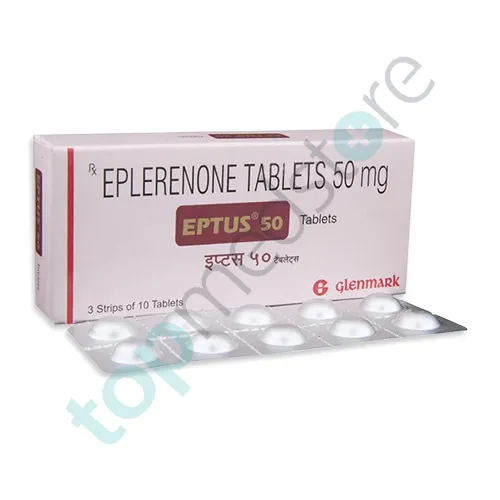
| Product name | Eplerenone 50mg |
|---|---|
| Active Ingredient | Eplerenone |
| Dosage | 50mg |
| Drug Type | Tablets |
| Indication | Heart Failure |
| Manufacturer | Glenmark |
Total $123.60
Eplerenone 50mg is a prescription medicine used to treat high blood pressure (hypertension) and heart failure. It is commonly prescribed by a cardiologist or physician to help control fluid balance in the body and reduce strain on the heart.
This medicine belongs to a group called aldosterone antagonists (potassium-sparing diuretics that block a hormone responsible for salt and water retention in the body).
In simple words, Eplerenone helps remove extra salt and water from the body while protecting the heart from stress and overwork.
The body produces a hormone called aldosterone (a natural hormone that tells the kidneys to retain sodium and water while losing potassium). When aldosterone levels are high, the body holds extra fluid. This increases blood pressure and makes the heart work harder.
This condition is commonly seen in heart failure (a condition where the heart becomes weak and cannot pump blood effectively) and long-term hypertension.
Eplerenone works by blocking the action of aldosterone in the kidneys and heart. Because of this blockage, the kidneys remove extra salt and water through urine while helping the body keep potassium at a safe level.
As excess fluid reduces, blood pressure comes down and the heart experiences less strain.
In simple words, this medicine helps the body reduce extra fluid buildup so the heart can work more easily and efficiently.
Eplerenone 50mg is mainly used for heart failure, especially in patients whose heart is weak after a heart attack or long-term heart disease.
It is also used for high blood pressure (hypertension) when fluid retention is contributing to increased pressure.
Doctors may prescribe it to reduce fluid overload (excess water in the body that can cause swelling, breathlessness, and fatigue).
It is also used to help protect the heart in patients with cardiovascular risk conditions (conditions that increase the chance of heart-related complications).
In clinical practice, a cardiologist uses this medicine when controlling fluid balance and improving heart function is important in long-term treatment.
Eplerenone works by blocking aldosterone receptors (specific sites in the body where aldosterone binds to control salt and water levels).
When these receptors are blocked, the kidneys remove more sodium and water from the body through urine. At the same time, potassium is retained.
This reduces fluid volume in the blood, which helps lower blood pressure and decreases the workload on the heart.
It also helps prevent long-term damage to the heart caused by continuous pressure overload and fluid retention.
In simple words, this medicine works by reducing extra water and salt in the body so the heart does not have to work as hard.
Some people may experience increased potassium levels in the blood (hyperkalemia, a condition where too much potassium can affect normal heart rhythm).
There may be dizziness or lightheadedness, especially when blood pressure begins to lower.
Some individuals may feel fatigue or weakness, particularly in the early stage of treatment.
In some cases, frequent urination may occur as the body removes extra fluid.
Rarely, kidney function changes may happen, especially in patients with existing kidney problems.
Most side effects are manageable with proper monitoring and dose adjustment.
This medicine should be taken only under the supervision of a cardiologist or physician.
Regular monitoring of kidney function and potassium levels is very important during treatment.
Avoid potassium-rich supplements or salt substitutes unless prescribed by a doctor.
Be careful while standing up quickly, as it may cause dizziness due to lowered blood pressure.
Inform your doctor if you have kidney disease, high potassium levels, or severe liver problems before starting treatment.
Do not stop the medicine suddenly without medical advice.
This content is for informational purposes only and does not replace medical advice, diagnosis, or treatment. Always consult your physician or cardiologist before starting or changing any medicine.
$88.20 – $288.00
$87.00 – $284.00
$28.50 – $93.60
$39.90 – $130.80