Agomelatine 25mg
$80.10 – $261.60
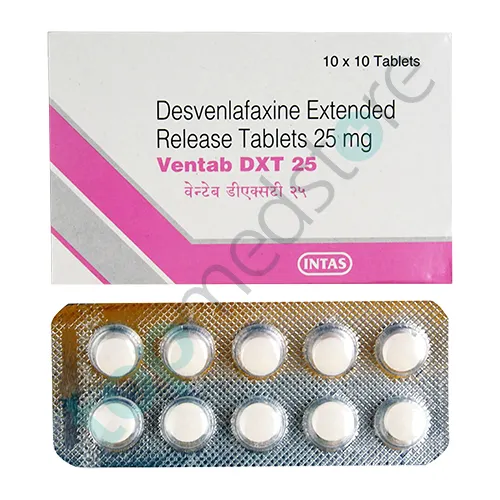
| Product name | Desvenlafaxine 25mg ER |
|---|---|
| Active Ingredient | Desvenlafaxine |
| Dosage | 25mg-ER |
| Drug Type | Tablets |
| Indication | Major Depressive Disorder |
| Manufacturer | Intas Pharma |
Total $172.00
Desvenlafaxine 25mg ER (Extended Release) is a prescription antidepressant medicine used to treat depression and anxiety-related conditions. It is commonly prescribed by a psychiatrist for patients who experience persistent low mood, lack of interest in daily activities, fatigue, or emotional imbalance.
The “ER” means extended release, which means the medicine is released slowly in the body over time, giving a more stable and long-lasting effect throughout the day.
In simple words, Desvenlafaxine helps improve mood and emotional balance by correcting brain chemical imbalance in a steady way.
The brain controls mood and emotions using natural chemicals called neurotransmitters (chemical messengers that carry signals between brain cells). Two important neurotransmitters involved in mood regulation are serotonin and norepinephrine.
In conditions like major depressive disorder (a mental health condition where a person feels persistent sadness, low energy, and loss of interest in life), these chemicals may become imbalanced.
Desvenlafaxine works by increasing serotonin and norepinephrine levels in the brain. It does this by blocking their reuptake (the process where brain cells absorb these chemicals back too quickly), allowing them to stay active for longer.
When these chemical levels improve, brain communication becomes more stable, which helps reduce depression and anxiety symptoms.
In simple words, this medicine helps balance brain chemicals so mood improves and emotional distress reduces gradually.
Desvenlafaxine 25mg ER is mainly used for major depressive disorder, where a person experiences long-term sadness, low motivation, and emotional exhaustion.
It may also be used for anxiety symptoms associated with depression, such as constant worry, nervousness, or mental tension.
Doctors may prescribe it when depression affects sleep, concentration, energy levels, and daily functioning.
In clinical practice, a psychiatrist uses this medicine when steady and long-term improvement in mood stability and emotional well-being is required.
Desvenlafaxine belongs to a group of medicines called SNRIs (Serotonin-Norepinephrine Reuptake Inhibitors, which are medicines that increase mood-regulating brain chemicals).
It works by increasing serotonin and norepinephrine levels in the brain. These chemicals help control mood, motivation, and emotional response.
By preventing their reuptake into nerve cells, the medicine allows these chemicals to remain active longer, improving brain signaling and emotional stability.
The extended-release form ensures slow and steady release, which helps maintain consistent effects throughout the day.
In simple words, this medicine helps improve mood by gradually balancing important brain chemicals in a stable way.
Some people may experience nausea or mild stomach discomfort, especially during the first few days of treatment.
There may be dry mouth or reduced appetite, which often improves over time.
Some individuals may notice sleep disturbances such as insomnia (difficulty sleeping) or increased sleepiness.
There may also be headache, dizziness, or increased sweating, especially during early treatment.
In some cases, mild increase in blood pressure may occur, so regular monitoring may be advised.
Rarely, restlessness or agitation may happen when starting the medicine.
Most side effects reduce as the body adjusts to the treatment.
This medicine should always be taken under the supervision of a psychiatrist.
Do not stop it suddenly, as this may cause withdrawal symptoms like dizziness, irritability, or mood changes.
Avoid alcohol, as it can increase drowsiness and affect mental clarity.
Be careful while driving or performing tasks that require full attention, especially in the initial phase of treatment.
Inform your doctor if you have high blood pressure, liver disease, or a history of bipolar disorder before starting treatment.
Regular follow-up helps monitor progress and adjust dosage if needed.
This content is for informational purposes only and does not replace medical advice, diagnosis, or treatment. Always consult your psychiatrist before starting or changing any medicine.
$80.10 – $261.60
$73.00 – $240.00
$39.00 – $128.00
$50.40 – $165.60