
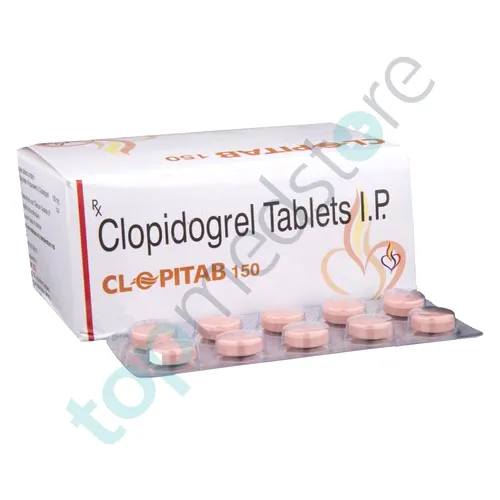
Clopidogrel 150mg
$181.00 – $592.00
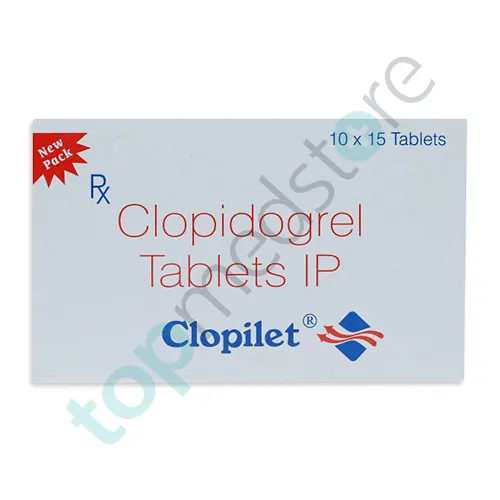
| Product name | Clopidogrel 75mg |
|---|---|
| Active Ingredient | Clopidogrel |
| Dosage | 75mg |
| Drug Type | Tablets |
| Indication | Cardiovascular Prevention |
| Manufacturer | Sun Pharma |
Total $59.85
Clopidogrel 75mg is a medicine used to help prevent blood clots in the body.
It is often called a blood thinner, but it does not actually thin the blood. Instead, it helps prevent blood cells called platelets from sticking together.
Platelets are small cells in the blood that help form clots. Clots are useful when you get injured, but unwanted clots inside blood vessels can be dangerous.
Doctors prescribe this medicine to reduce the risk of serious heart and brain problems caused by clots.
Cardiologists commonly use Clopidogrel 75mg tablets for long-term protection of the heart and blood vessels.
After you take Clopidogrel 75mg, the medicine enters the bloodstream and works on platelets.
Normally, platelets become active when there is damage in a blood vessel. They stick together and form a clot.
This process can become harmful when clots form inside healthy blood vessels.
Clopidogrel reduces the ability of platelets to stick together.
When platelets stay less sticky, blood flows more smoothly through the vessels.
This helps reduce the risk of sudden blockage in arteries.
Blocked arteries can lead to serious conditions like heart attack or stroke.
The medicine works slowly and builds its effect over time with regular use.
Doctors prescribe Clopidogrel 75mg mainly to prevent blood clot-related conditions.
It is commonly used after a heart attack or stroke to prevent future events.
A heart attack happens when blood flow to the heart is blocked. A stroke happens when blood flow to the brain is blocked.
The medicine is also used in patients with peripheral artery disease, a condition where blood flow to the legs becomes poor due to narrowed arteries.
It may also be used after placing a stent in the heart. A stent is a small tube that helps keep an artery open.
Doctors often prescribe this medicine along with other heart medicines for better protection.
Patients with bleeding disorders, liver disease, or stomach ulcers should inform their doctor before using this medicine.
Clopidogrel works by acting on platelets in the blood.
Platelets normally become sticky when the body needs to form a clot.
Clopidogrel blocks a chemical signal inside platelets called ADP.
This signal is important for platelets to become active and stick together.
When this signal is blocked, platelets stay less active.
Because of this, they do not clump together easily.
This reduces the formation of unwanted clots inside blood vessels.
Better blood flow helps lower the risk of heart attack and stroke.
Doctors usually recommend taking this medicine daily for long-term protection.
Like all medicines, Clopidogrel 75mg may cause side effects in some patients.
Common side effects include:
bruising, mild bleeding, nosebleeds, stomach discomfort, or headache.
Some patients may notice longer bleeding time from small cuts.
Rare but serious side effects include:
severe bleeding, stomach bleeding, blood in urine or stool, allergic reactions, or low platelet count.
Signs of serious bleeding may include black stools, vomiting blood, or unusual weakness.
Patients should seek immediate medical help if these symptoms appear.
Doctors may monitor blood counts in long-term treatment.
Patients should be careful while using sharp objects or during dental procedures.
This content is for educational purposes only. It does not replace medical advice, diagnosis, or treatment. Always consult a cardiologist or healthcare professional before using Clopidogrel 75mg. Use this medicine only as prescribed and follow regular medical checkups during treatment.
$181.00 – $592.00
$59.85 – $592.00