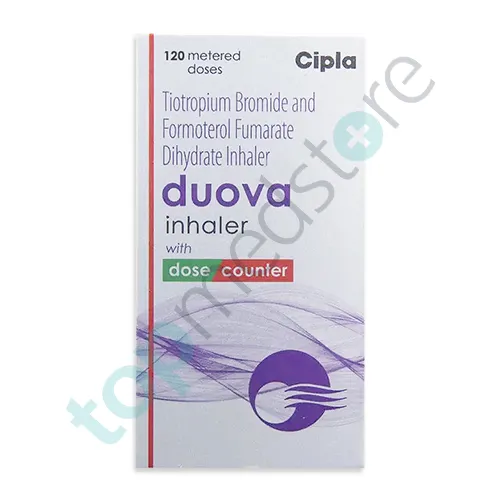
Tiotropium Bromide 18mcg
$144.00 – $470.40

Budesonide–Formoterol is a prescription inhaler medicine used for the long-term management of asthma and chronic obstructive pulmonary disease (COPD). It is commonly prescribed by a pulmonologist (lung specialist) who treats breathing and lung disorders.
This medicine contains two active ingredients: Budesonide and Formoterol. Both work together to improve breathing and reduce breathing problems over time.
Budesonide–Formoterol inhaler is not a tablet or syrup. It is inhaled directly into the lungs, so the medicine reaches the airways quickly and works where it is needed most.
Asthma and COPD are long-term lung conditions. In these conditions, the airways become narrow, swollen, and filled with mucus. This makes it hard for air to move in and out of the lungs.
Because of this, patients may feel shortness of breath, wheezing, chest tightness, and frequent coughing. Wheezing means a whistling sound while breathing.
Budesonide–Formoterol medicine helps control these symptoms and improves daily breathing comfort. It is used as a regular controller treatment, not just for emergency relief.
Budesonide–Formoterol works in the lungs to reduce swelling and open airways for easier breathing.
Budesonide is a corticosteroid medicine. It reduces inflammation inside the airways. Inflammation means swelling, redness, and irritation in the breathing tubes. When swelling reduces, air can pass more easily through the lungs.
Inflammation in asthma and COPD is caused by an overactive immune response. The immune system reacts strongly to triggers like dust, smoke, pollution, or allergens. This leads to narrowed airways and mucus buildup.
Formoterol is a long-acting bronchodilator. A bronchodilator is a medicine that relaxes the muscles around the airways. When these muscles tighten, breathing becomes difficult. When they relax, the airways open wider.
So, Budesonide reduces inflammation and Formoterol relaxes airway muscles.
Together, Budesonide–Formoterol inhaler improves airflow, reduces mucus buildup, and helps prevent breathing attacks.
This medicine works continuously when used regularly. It helps maintain stable breathing throughout the day and night.
Doctors prescribe Budesonide–Formoterol inhalers for long-term control of chronic breathing problems.
It is commonly used in:
Asthma is a condition where airways become sensitive. Even small triggers like dust or cold air can cause breathing difficulty.
COPD is a progressive lung disease. Progressive means it slowly worsens over time. It is often linked to smoking or long-term exposure to polluted air.
A pulmonologist may recommend this inhaler when symptoms are frequent or when a single medicine is not enough to control breathing problems.
This medicine is used daily to maintain control. It is not meant for immediate emergency relief during sudden severe attacks.
Budesonide–Formoterol works through a dual action approach in the lungs.
Budesonide reduces inflammation inside the airways. Inflammation causes swelling and excess mucus production. This narrows the airways and makes breathing difficult. When Budesonide reduces inflammation, the airways become less swollen and more open.
It also helps calm the immune system response in the lungs. This reduces sensitivity to triggers like smoke, dust, or allergens.
Formoterol works by relaxing the smooth muscles around the airways. These muscles control the size of the air passages. When they tighten, breathing becomes hard. When they relax, air flows easily.
Airways are small tubes that carry air into the lungs. In asthma and COPD, these tubes become narrow due to swelling and muscle tightening.
By combining both actions, Budesonide–Formoterol inhaler improves airflow, reduces breathing difficulty, and helps prevent future attacks.
Regular use helps maintain stable lung function and improves quality of life over time.
Like all medicines, Budesonide–Formoterol may cause side effects in some patients, especially at the beginning of treatment.
Common side effects include throat irritation, cough, hoarseness of voice, dry mouth, and mild headache. Hoarseness means the voice becomes rough or weak.
Some patients may experience tremors (shaking hands), mild nervousness, or fast heartbeat due to Formoterol. These effects are usually temporary.
Budesonide inhaler use may sometimes lead to oral thrush, which is a fungal infection in the mouth. It appears as white patches and can cause discomfort or soreness.
Rinsing the mouth with water after each use helps reduce the risk of oral thrush.
Rare side effects may include chest discomfort or worsening breathing symptoms in sensitive individuals.
A pulmonologist may adjust the dose or treatment plan if side effects continue or become uncomfortable.
This content is for educational purposes only. It is not a substitute for professional medical advice, diagnosis, or treatment. Always consult a pulmonologist or qualified healthcare provider before using Budesonide–Formoterol inhalers for asthma or COPD treatment.
| Product name | Budesonide-Formoterol |
|---|---|
| Category | Asthma & COPD Medicines |
| Shipping offer | Free shipping on orders of $110.00 or more |
$144.00 – $470.40
$125.40 – $410.40
$132.00 – $432.00