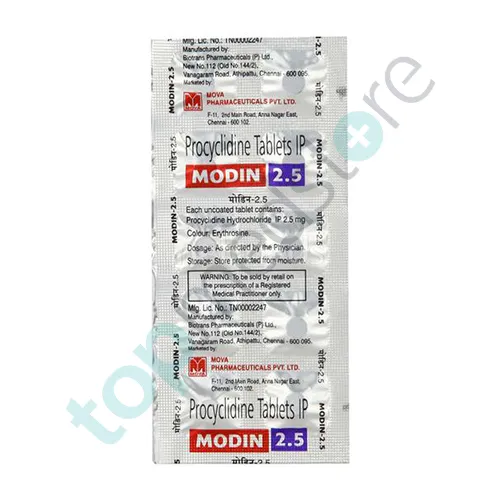
Procyclidine 2.5mg
$19.00 – $64.00

Amantadine Hydrochloride (Amantadine HCl) is a prescription medicine used to treat Parkinson’s disease, drug-induced movement problems, and sometimes viral infections like influenza A. A neurologist usually prescribes this medicine. A neurologist is a doctor who treats brain and nerve disorders.
Parkinson’s disease is a long-term condition that affects body movement. It can cause shaking, muscle stiffness, slow movements, and balance problems.
Some patients also develop movement problems due to long-term use of certain psychiatric medicines. This is called drug-induced extrapyramidal symptoms, which means unwanted muscle stiffness or abnormal movements caused by medicines.
Amantadine helps improve movement control and reduce stiffness in such conditions.
It is available as tablets, capsules, and syrup depending on patient needs.
Regular use may help improve mobility, daily functioning, and comfort in movement disorders.
Amantadine HCl works by improving brain chemical activity involved in movement control.
In Parkinson’s disease, the brain has low levels of dopamine, a chemical that helps control smooth and coordinated movements.
Amantadine helps increase dopamine activity in the brain.
It also blocks a brain chemical called glutamate, which can overactivate nerve signals and worsen movement symptoms.
Glutamate is a chemical that helps nerve cells send signals, but too much activity can cause imbalance in movement control.
By balancing dopamine and glutamate activity, Amantadine helps improve muscle control and reduce stiffness.
The medicine may also improve nerve signaling efficiency, which supports better coordination and movement.
In some cases, it may provide mild stimulation to help reduce fatigue.
Doctors prescribe Amantadine HCl for several movement and neurological conditions.
It is commonly used in Parkinson’s disease to reduce stiffness, tremors, and slow movement.
It may also help improve mobility and daily activity performance in patients with Parkinson’s symptoms.
The medicine is used to treat drug-induced extrapyramidal symptoms, which include muscle stiffness, tremors, or involuntary movements caused by certain psychiatric medicines.
Some doctors may use it to help manage fatigue and improve alertness in certain neurological conditions.
In some cases, it has been used for influenza A virus infections, although this use is less common today due to resistance.
Overall, the main role of Amantadine is improving movement control and reducing motor symptoms.
Amantadine HCl works by affecting brain chemicals that control movement.
It increases dopamine activity in brain regions responsible for movement coordination.
Dopamine helps the brain send smooth signals to muscles for controlled movement.
In Parkinson’s disease, dopamine levels are reduced, leading to stiffness and tremors.
Amantadine also blocks NMDA receptors, which respond to glutamate.
Excess glutamate activity can disrupt normal movement signals and worsen symptoms.
By balancing dopamine and glutamate, the medicine helps improve motor control.
This leads to better movement, reduced stiffness, and improved coordination in some patients.
Doctors may adjust the dose based on response and kidney function.
Like all medicines, Amantadine HCl may cause side effects, although many are mild and manageable.
Some patients may experience dizziness, headache, or nausea during treatment.
Sleep disturbances such as insomnia or unusual dreams may occur.
Certain patients may feel restless, anxious, or confused, especially in older adults.
Dry mouth or constipation may also develop in some individuals.
In some cases, the skin may develop a lacy purple discoloration, especially on the legs. This is called livedo reticularis.
Rarely, hallucinations, mood changes, or swelling in the legs may occur.
Patients should seek medical help if they develop severe confusion, chest pain, breathing difficulty, or unusual behavioral changes.
Doctors may monitor kidney function and mental status during long-term use.
This content is for informational purposes only. It does not replace professional medical advice, diagnosis, or treatment. Always consult a neurologist or healthcare professional before starting or changing Amantadine HCl treatment. Use this medicine only as prescribed and follow regular medical monitoring for safe neurological care.
| Product name | Amantadine Hcl |
|---|---|
| Category | Parkinson's Disease Medicines |
| Shipping offer | Free shipping on orders of $110.00 or more |
$19.00 – $64.00
$48.00 – $158.00
$96.00 – $316.00
$63.00 – $208.00